


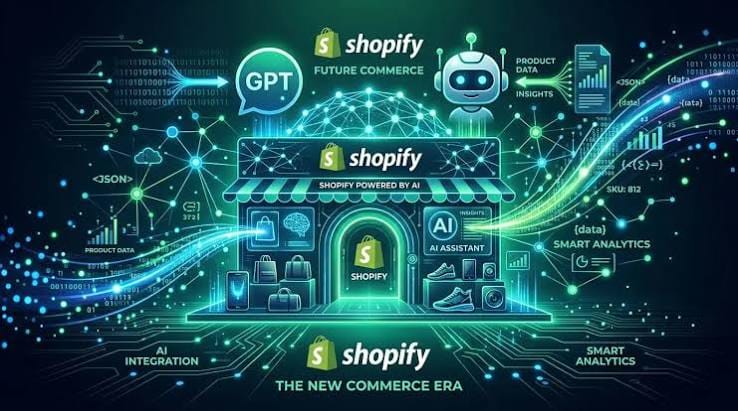
Shopify agentic storefronts are officially the best proven way for digital retailers to distribute product catalogs directly into conversational artificial intelligence applications.
Shopify has quietly shifted its e-commerce infrastructure toward autonomous commerce. If your store meets baseline eligibility criteria, the platform now automatically signs your business up for every new conversational shopping app it integrates. This automated pipeline is how merchant catalogs were immediately distributed to Meta on September 8, 2026, coinciding with the public rollout of Meta’s autonomous shopping agent, Muse.
Just as brands navigating complex sectors must build structured operational frameworks marketing in regulated industries, online store owners must understand how autonomous distribution affects catalog visibility, checkout tracking, and channel attribution.
If you want to maintain control over your catalog while capturing emerging conversational demand, here are the 5 best proven secrets explaining how Shopify agentic storefronts operate.
1. How Shopify Agentic Storefronts Auto-Enroll Stores {#how-auto-enroll-works}
The primary mechanism powering Shopify agentic storefronts is a default toggle labeled “Allow Shopify to manage for me,” located under the Agentic sales channel within your store admin.
When left active, this feature automatically grants external AI channels continuous access to your inventory via the unified Shopify Catalog. It simultaneously turns on direct in-chat purchasing for eligible partners and enrolls your store into newly introduced platforms without requiring manual administrative confirmation.
This automated pipeline explains why products from eligible Shopify stores surfaced within Meta Muse the moment it launched. Muse functions as an autonomous intelligent agent designed to browse web interfaces, complete digital forms, and negotiate purchases on behalf of end users. Additionally, the administrative dashboard includes an “Other channels” designation that distributes product feeds to startup shopping engines and conversational search engines.
2. Direct Checkout in Shopify Agentic Storefronts {#direct-checkout-mechanics}
A core structural capability of Shopify agentic storefronts is direct checkout, which allows customers to buy items directly inside a chat window without ever visiting your domain.
Eligibility and technical implementations differ across platforms:
- Meta: Available for stores shipping to buyers located in the United States, Canada, or Mexico.
- Google AI Mode and Gemini: Available for US-based merchants fulfilling orders to US buyers, utilizing product data synchronized through Google Merchant Center.
- Microsoft Copilot: Open to merchants selling within the United States.
- ChatGPT: Unlike native in-app checkouts, ChatGPT currently directs prospective buyers to your hosted web checkout, rendering within an in-app browser pane on mobile or a new tab on desktop.
Because the buying process is completed inside conversational interfaces, merchants can secure sales at the moment of intent, bypassing standard storefront friction.
3. Analytics Blind Spots in Shopify Agentic Storefronts {#analytics-tracking-issues}
While native checkouts eliminate purchase friction, Shopify agentic storefronts create significant tracking gaps for merchants relying exclusively on browser-based tracking pixels.
When a customer completes a transaction inside Meta, Google, or Microsoft Copilot, client-side tracking scripts do not execute. Traditional Google Analytics 4 (GA4) tags and custom JavaScript tracking pixels do not fire during these native checkout sequences; only server-to-server integrations capture the transaction event reliably.
Shopify continues to log these transactions within the primary administrative dashboard, attributing the order to its corresponding sales channel. However, media buyers who evaluate return on ad spend (ROAS) primarily through third-party ad dashboards will observe discrepancies, as conversational checkouts will not be credited to standard digital campaign sources.
4. Managing Settings in Shopify Agentic Storefronts {#managing-channel-settings}
Merchants who do not want their entire catalog syndicated across experimental applications can tightly modify their Shopify agentic storefronts configuration.
Deactivating the master toggle (“Allow Shopify to manage for me”) reveals granular operational controls:
- Shopify Catalog Access: Controls overall data syndication to third-party language models.
- Auto Enroll New Storefronts: Preserves your currently enabled AI platforms while preventing Shopify from automatically adding new partners.
- Direct Checkout: Enables or disables native conversational purchasing on a channel-by-channel basis.
If you turn off catalog access, data synchronization can take up to seven business days to fully propagate across partner indexes. To exclude a single item from conversational search, mark that item as “unlisted,” which simultaneously removes it from public sitemaps.
5. Transaction Fees in Shopify Agentic Storefronts {#fees-and-meta-cut}
At present, major artificial intelligence platforms do not charge listing fees or incremental take rates on Shopify agentic storefronts transactions.
Merchants processing sales via ChatGPT, Google, Microsoft Copilot, or Meta are subject only to standard payment gateway processing fees. Furthermore, the merchant remains the seller of record, retaining full responsibility for inventory fulfillment, return management, and direct customer support.
However, monetization structures are expected to evolve. Leadership at Meta has indicated that future business models for tools like Muse will likely involve taking a small revenue cut on completed transactions directly from merchant partners. Filtering your monthly orders report specifically by channel remains the most accurate method to assess direct conversion volume.
For technical instructions on catalog settings and channel-specific policies, review the official documentation on the Shopify Help Center.
Frequently Asked Questions
What are Shopify agentic storefronts?
Shopify agentic storefronts refer to Shopify’s native sales channel integration that automatically connects merchant product feeds to artificial intelligence chat applications, enabling search visibility and direct in-chat transactions across platforms like ChatGPT, Meta Muse, and Microsoft Copilot.
Can customers purchase products directly inside AI apps?
Yes. On platforms supporting direct checkout (such as Meta, Google Gemini, and Microsoft Copilot), qualified consumers can complete their orders inside the AI conversation without visiting the merchant’s external website.
How do in-chat checkouts impact Google Analytics?
Because the purchase takes place within an embedded conversational container, standard client-side browser pixels and Google Analytics tags do not execute. Orders are recorded within the Shopify backend, requiring server-side tracking to capture off-site conversion data accurately.

