


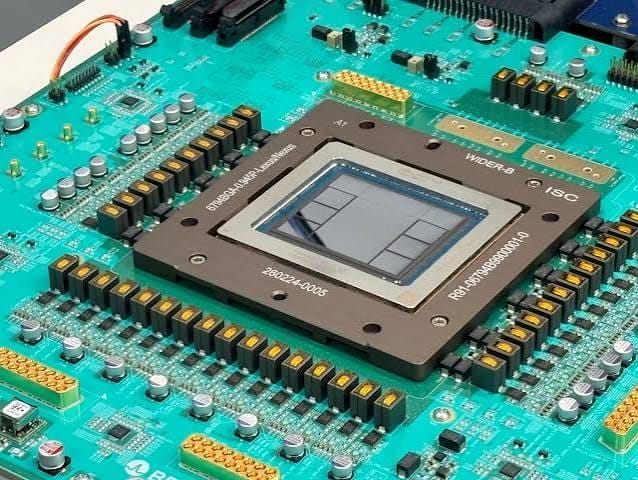
Architect Labs Redwood is officially the most disruptive hardware development in modern artificial intelligence. While major AI models shift drastically in mere months, the physical inference chips they run on are traditionally locked into rigid hardware designs years in advance.
According to a functional verification study commissioned by Siemens EDA, just 14% of integrated circuit projects achieved first-silicon success in 2024—the absolute lowest rate in two decades. This massive design lag forces hardware teams to heavily compromise their silicon, paying for massive uncertainty by adding bloated generalizations that map poorly to future workloads.
However, a revolutionary new startup is actively shrinking that massive hardware cycle from years down to weeks. Just as digital marketers must rigorously update their schema for AI search to maintain agility against changing search algorithms, hardware architects can now dynamically optimize silicon for specific workloads. By running the entire design flow through an autonomous system, the Architect Labs Redwood inference chip was fully generated from a written spec to a working FPGA implementation in under 14 days. Here are the 5 shocking breakthroughs regarding this new AI-generated hardware.
Table of Contents
- How Architect Labs Redwood Achieved End-to-End AI Design
- Exploring a Massive Architectural Search Space
- Architect Labs Redwood vs. Nvidia: Projected Silicon Performance
- Solving Hardware Latency and Power Constraints
- The Era of Recursive Self-Improvement
- Frequently Asked Questions
1. How Architect Labs Redwood Achieved End-to-End AI Design
The traditional hardware design cycle is notoriously slow. Design stages are heavily frozen as they go, and late-stage changes are either made completely ad hoc or aggressively held back for the next product generation.
The Architect Labs Redwood chip completely destroys this legacy timeline. According to the published research, two human architects simply wrote a high-level chip specification. The proprietary Architect Labs Platform then completely handled the complex performance modeling, autonomously generated the digital hardware descriptions, heavily tested and verified the design, and reliably produced the required firmware and custom kernels.
In incredibly shocking results, this entire autonomous process for Architect Labs Redwood took under two weeks. Furthermore, once specification changes were verified by the team, a heavily modified design was successfully back on the field-programmable gate array (FPGA) in less than 48 hours. Every single block reached 95% code and functional coverage entirely without human verification engineers actively participating.
2. Exploring a Massive Architectural Search Space
The primary advantage of allowing an AI system to drive the design flow is raw mathematical scale. The AI can dynamically explore a microarchitectural search space an entire order of magnitude larger than a standard human engineering team could possibly cover in the exact same timeframe.
For one specific vector engine natively inside the Architect Labs Redwood design, the artificial intelligence seamlessly generated and verified multiple distinct design options featuring heavily varying control logic and complex data paths. It worked tirelessly over several days to heavily optimize the hardware strictly for area and strict timing constraints.
Human experts simply adjust the core specification utilizing functional, area, performance, and power feedback, and the system instantly regenerates and actively reverifies the specific design from there. The massive software-to-silicon stack is efficiently collapsed into one single optimization loop specifically for the Architect Labs Redwood ecosystem.
3. Architect Labs Redwood vs. Nvidia: Projected Silicon Performance
The ultimate question for the Architect Labs Redwood project is exactly whether this brilliant FPGA demonstration can successfully translate into highly fabricated silicon. To test this, the researchers evaluated a specific configuration called Redwood Nano against Nvidia’s highly popular Jetson Orin Nano, the current commercial baseline for edge AI hardware.
In measured results running directly on the FPGA at 250 megahertz, Redwood Nano achieved a highly respectable average throughput of 12.1 tokens per second while actively running the Qwen3 0.6B large language model (LLM).
However, the massive advantage actively shows up in their estimates for fabricated silicon. When projected onto a Samsung 8nm-class process (comparable specifically to the Nvidia Jetson), the team projects Architect Labs Redwood will easily reach 49 tokens per second. This actively represents 1.75X the measured throughput of the Nvidia Jetson while drawing roughly half the total power (1.335 watts vs. 2.59 watts). This equates to a staggering 3.4X overall improvement safely in raw performance per watt.
4. Solving Hardware Latency and Power Constraints
The Architect Labs Redwood architecture was strictly designed to beautifully address three highly practical physical problems: latency, raw power, and predictability.
To heavily reduce the massive energy wasted actively shuttling data back and forth, data is intelligently kept as incredibly close to the compute units as physically possible. The chip heavily features a highly structured grid of identical building blocks called “tiles.” Each tile safely performs a highly specific slice of computational work and seamlessly passes it directly to neighboring tiles. Data flawlessly flows in a strictly planned pattern rather than being unnecessarily pulled from shared memory.
Furthermore, Architect Labs Redwood aggressively conserves power by physically separating the strict control logic directly from the raw compute. Logic can actively slow down or power completely off when not deeply needed. A global hardware timer safely schedules each kernel, making the entire real-time inference process significantly more predictable.
5. The Era of Recursive Self-Improvement
Perhaps the absolute most fascinating experiment actively conducted by the engineering team involves an incredibly early form of recursive self-improvement, a massive milestone noted in industry reporting by tech outlets like VentureBeat.
The hardware team successfully deployed the Qwen3 AI model natively on the Architect Labs Redwood accelerator, fully exposed it securely as an active inference endpoint directly within their overarching AI design system, and rapidly sampled it repeatedly. Incredibly, the AI model successfully found multiple deep timing improvements and custom kernel optimizations explicitly for several of its very own operations.
An artificial intelligence system actively designed a robust AI accelerator, seamlessly deployed an AI model natively on it, and then successfully used that exact model to dynamically improve the next future generation of the exact same accelerator. With plans to aggressively move into physical design and a highly anticipated tapeout at TSMC, the hardware industry is actively watching a complete paradigm shift unfold via Architect Labs Redwood.
Frequently Asked Questions
What is the Architect Labs Redwood chip?
Architect Labs Redwood is a highly advanced, low-power AI inference accelerator chip that was fully designed, deeply verified, and completely programmed end-to-end entirely by an autonomous artificial intelligence system in under two weeks.
How does Architect Labs Redwood compare to Nvidia Jetson?
While currently deployed on an FPGA, projections utilizing a comparable Samsung 8nm-class process show that Architect Labs Redwood delivers 1.75X the overall throughput of the Nvidia Jetson Orin Nano while drawing half the power, resulting in a massive 3.4X improvement in total performance per watt.
What is recursive self-improvement in chip design?
Recursive self-improvement occurs when an AI system successfully designs an AI hardware accelerator, runs a language model directly on that new chip, and actively uses that running model to discover deep optimizations to improve the next generation of the hardware.

