


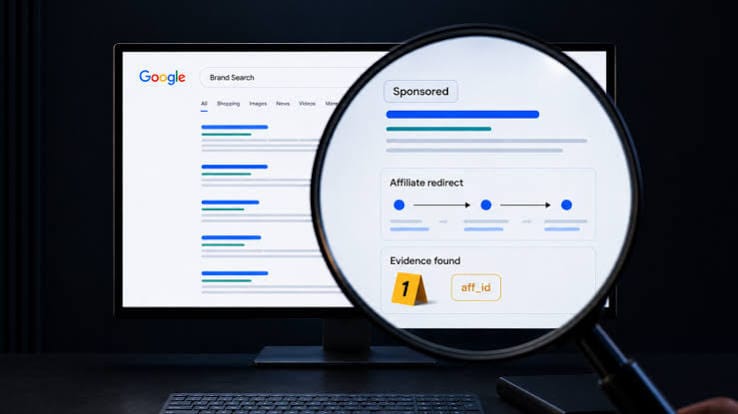
Affiliate brand bidding is secretly draining marketing budgets across the globe. Branded keywords should always be your absolute cheapest and most profitable clicks. So why exactly are your branded CPCs going up? You have checked your Auction Insights, evaluated your bid strategies, and accounted for seasonality, but none of those factors explain the consistently rising costs. Who else is bidding on your brand, and why are you paying more for traffic you already earned?
Just as digital marketers must adapt to changing search algorithms Search Console block flattening, you must actively defend your paid search territory. Surprisingly enough, the fiercest competition in your paid auction may actually be your own affiliates. When they engage in unauthorized affiliate brand bidding to artificially increase their sales, you pay twice without realizing it: you suffer higher CPCs on your own Google Ads, and you pay a commission on each sale they intercept. Here are 5 best shocking secrets to trace and stop this budget leakage.
Table of Contents
- The Blind Spot in Affiliate Brand Bidding
- How Fast Affiliate Brand Bidding Can Move
- Why Strong Affiliate Performance Can Be Misleading
- How to Spot Affiliate Brand Bidding Manually
- Stop Affiliate Brand Bidding at Scale
- Frequently Asked Questions
1. The Blind Spot in Affiliate Brand Bidding
Most mature affiliate programs successfully track clicks, conversions, commissions, and overall partner performance. However, what is significantly harder to see is what happened right before a conversion officially entered the affiliate platform.
A standard report may happily show that a partner generated 150 conversions this month. What it will not show is that the exact same partner was engaging in restricted affiliate brand bidding and using sneaky URL redirects to hide their unauthorized activity before the conversion was attributed. Detection often requires intense manual work. Affiliate managers must physically search branded keywords, check advertisers, follow hidden redirects, and carefully match their findings to specific partners. This manual gap creates a massive blind spot for brands trying to scale safely.
2. How Fast Affiliate Brand Bidding Can Move
The problem with manual detection is overall coverage. Paid search changes dynamically by market, keyword, device, and time of day, while rogue brand bidders can rapidly change domains, geographic targeting, and redirect paths. Keeping up with this manually can quickly become a full-time job.
Data monitored during Q2 2026 shows exactly how quickly affiliate brand bidding hijacking activity is evolving. The United States led all monitored markets for hijacking, followed closely by the U.K., Germany, Canada, and India. This data is critical because manual monitoring tends to focus only on markets that internal teams already consider highly important. Paid search manipulation does not always follow your internal assumptions, allowing hijackers to drain your budget in secondary markets completely unnoticed.
3. Why Strong Affiliate Performance Can Be Misleading
Unauthorized affiliate brand bidding can remain completely undetected for months because it often produces incredibly strong performance metrics rather than obviously suspicious results.
Consider a loyal customer who discovers a company through organic SEO, paid media, or word of mouth. Later, that exact customer searches specifically for the company by its brand name. A rogue affiliate ad appears, the customer clicks it, reaches the company’s website, and makes a purchase. Everything looks perfectly correct on a technical level. The conversion is genuine, the cookie tracking works smoothly, and the affiliate receives a massive payout. However, the brand just paid a commission for a customer they had already acquired. You can read more about standard industry attribution practices directly on Wikipedia.
4. How to Spot Affiliate Brand Bidding Manually
If you suspect your program is suffering from budget leakage, you must actively hunt for evidence of affiliate brand bidding. Here is a proven manual workflow to identify violators:
- Define the Violations: Start with your affiliate agreement and paid search policy. Clearly identify which branded keywords affiliates cannot bid on.
- Build a Search Test List: Create a comprehensive list that includes your brand name, core product names, high-volume misspellings, and commercial combinations.
- Capture the Rogue Ad: When a suspicious ad appears, immediately record the keyword, search engine, location, device, ad copy, and position. Always take screenshots before clicking.
- Match the Evidence: Follow the redirect path and look for affiliate tracking links along the way. Compare those tracking identifiers with your platform records. For deeper insights into search engine advertising mechanics and bidding wars, consult authoritative resources like Search Engine Journal.
5. Stop Affiliate Brand Bidding at Scale
More attribution data does not automatically create transparency. A conversion can be tracked flawlessly while its source behavior remains entirely invisible. A partner can look highly effective while secretly engaging in affiliate brand bidding to steal your organic traffic.
When manual monitoring stops scaling, brands must turn to automated solutions. AI-powered monitoring can analyze search activity at an international scale, connect patterns across rogue advertisers, map complex redirect paths, and surface exact cases that require immediate review. Better visibility is not only about preventing commission leakage; it helps teams enforce PPC policies, identify repeat violations, and protect your most legitimate affiliate partners from unfair competition.
Frequently Asked Questions
What is affiliate brand bidding?
Affiliate brand bidding occurs when a third-party affiliate marketer places paid search ads targeting your specific trademarked brand name, often violating your program’s terms of service to intercept your organic traffic.
Why do my branded CPCs keep increasing?
When an affiliate secretly competes with your official brand on the exact same branded keywords, it adds another aggressive bidder to the Google Ads auction. This artificial competition directly puts upward pressure on your Cost Per Click (CPC).
How can I stop affiliates from bidding on my brand?
You must establish a strict PPC policy in your affiliate terms and conditions, manually or automatically monitor search engine results pages for your brand terms, document the redirect links of violating ads, and aggressively withhold commissions from offending partners.

