


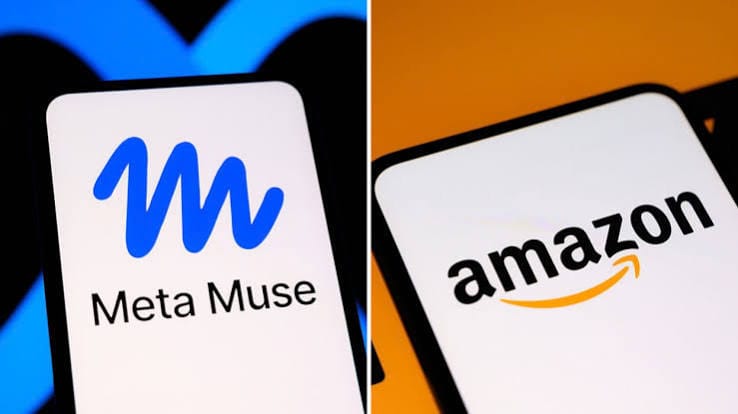
The explosive rise of AI shopping agents is officially causing massive disruption across the global retail industry.
On the night of September 20, 2026, tech-savvy shoppers who seamlessly deployed Meta’s highly anticipated agent, Muse, to amazon.com immediately hit a digital brick wall. Shoppers were greeted with a stark block page stating that unauthorized algorithmic access explicitly violates Amazon’s Conditions of Use.
Website owners who desperately want to ban aggressive automated software typically rely on technical protocols or complex hacking statutes. However, Amazon chose to ruthlessly enforce its basic customer terms of service instead.
Just as power users must carefully manage their digital footprint Proton VPN hacks secrets, massive retailers must actively govern how autonomous software interacts with their stores.
Here are the 5 amazing secrets surrounding how Amazon officially blocked Meta’s AI shopping agents.
1. Why Robots.txt Failed Against AI Shopping Agents
The traditional robots.txt protocol completely failed to stop Meta’s AI shopping agents because the protocol explicitly requires a declared software name.
A standard rule in this exclusion file names a specific “user agent string”—the exact label a piece of software actively broadcasts when it pings a website. Meta’s official crawler documentation explicitly lists five distinct agents, but the heavily utilized Muse agent is suspiciously absent from that public list.
Amazon’s live robots.txt explicitly declares 101 strict user agent blocks, flatly refusing entire website access to aggressive scrapers like GPTBot, ClaudeBot, and PerplexityBot. However, because Meta cleverly deployed Muse entirely without a public user agent string, Amazon had absolutely no name to confidently ban in its server protocol.
2. Amazon’s Massive Defeat in Federal Court
The Computer Fraud and Abuse Act (CFAA), the powerful 1986 federal anti-hacking statute, recently grew significantly weaker for Amazon.
On August 4, 2026, the Ninth Circuit heavily overturned a protective court order Amazon had aggressively won against Perplexity. The federal appeals court conclusively ruled that the human shopper—not the software vendor—is the singular legal entity physically accessing the digital website.
Because Perplexity’s software natively runs on the shopper’s personal computer, the vendor’s servers never physically ping Amazon’s network. The federal court flatly refused Amazon’s desperate request to comprehensively rehear the controversial case.
Consequently, the federal anti-hacking law is officially dead as a legal weapon against autonomous, user-deployed AI shopping agents. To deeply understand the strict nuances of this critical federal law, explore extensive legal documentation on the Computer Fraud and Abuse Act.
3. The Enforced Terms of Service Loophole
Because federal hacking statutes legally failed, Amazon heavily weaponized its own Conditions of Use against Meta’s AI shopping agents.
The Conditions of Use is the explicit legal agreement a human shopper blindly accepts the moment they officially open an Amazon account. Amazon boldly claimed that Meta never disclosed Muse’s access, actively hid its software identity, and potentially stored highly sensitive customer credentials.
All three complaints were aggressively aimed directly at Meta, yet the legal document Amazon enforced strictly binds the human shopper. By brilliantly weaponizing its own terms, Amazon legally bypassed Meta entirely and directly penalized the exact customers utilizing the agent.
4. The Hidden Privacy and Credential War
Amazon aggressively claimed that Muse secretly captures and insecurely stores highly sensitive customer checkout credentials.
Conversely, Meta explicitly stated on launch day that private credentials are securely held by an isolated background service inside a heavily encrypted virtual machine. Meta emphatically claims the central generative model literally never sees the raw passwords.
Amazon raised extreme privacy concerns without publicly releasing any captured server requests, explicit API endpoints, or a verified disclosure timeline. Amazon inherently depends heavily on real humans browsing pages to desperately drive its $68 billion digital advertising business, giving them a massive financial incentive to aggressively block automated checkout bots.
5. Identifying the Unidentifiable Bots
Meta proudly promised that when its AI shopping agents browse the internet, they simply look exactly like a real human’s normal web activity.
Because the software smoothly drives a real Chromium-based browser, the destination website supposedly records an utterly ordinary, completely undetectable customer session. However, Amazon somehow managed to accurately identify Muse sessions and brilliantly served them a custom denial page.
To this day, neither Amazon nor GeekWire has explicitly revealed exactly how Amazon’s engineers achieved this incredible technical feat. If Meta actively runs these advanced cloud agents on Amazon Web Services (AWS) hardware, Amazon might be secretly monitoring its own rented servers to confidently block the traffic.
Frequently Asked Questions
What are AI shopping agents?
AI shopping agents are highly autonomous software programs that browse digital retail websites, confidently compare product prices, and aggressively complete full online purchases on behalf of a human user.
Why did Amazon officially block Meta’s Muse?
Amazon aggressively blocked Muse because the software failed to properly identify itself to servers, allegedly stored highly sensitive user login credentials, and explicitly bypassed Amazon’s massively profitable digital advertising ecosystem.
Can websites legally ban artificial intelligence agents?
Yes. Because federal anti-hacking laws completely failed to regulate these bots, major retail websites are aggressively updating their customer Terms of Service to explicitly ban unauthorized algorithmic purchasing software.

