


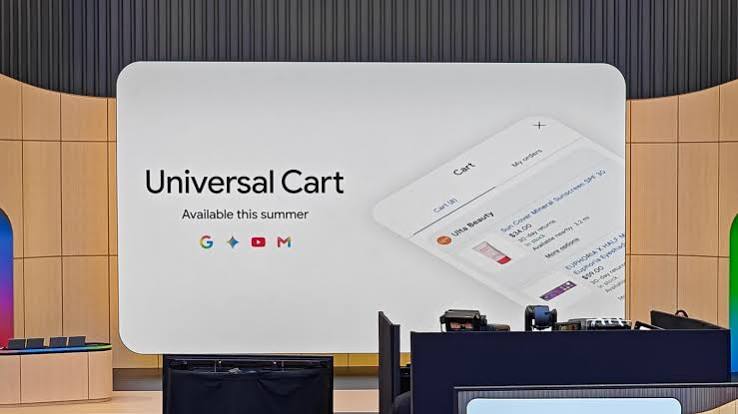
Understanding the massive impact of the google universal cart is rapidly becoming a strategic challenge for enterprise ecommerce directors today.
Google is officially rolling out this highly anticipated centralized shopping experience in the United States, allowing users to effortlessly save products from multiple retailers, track prices, and complete transactions across Search and the Gemini app. The new feature aims to radically simplify online shopping by bringing product discovery, savings, and checkout into one unified digital space.
Just as technical digital marketers must carefully measure ai referral traffic to prove their campaign ROI, retail merchandisers must deeply understand the google universal cart to protect their digital market share.
If your ecommerce brand relies heavily on organic product discovery, here is a complete guide to understanding how this new AI-powered shopping ecosystem will transform consumer behavior.
1. What is the Centralized Shopping Hub?
Shoppers frequently discover exciting products across many different retailers and digital platforms, making it incredibly difficult to keep track of items, fluctuating prices, and limited-time promotions. The google universal cart successfully brings those fragmented experiences together into one cohesive hub.
This new feature acts as a shared digital shopping basket across Google’s massive ecosystem. It allows users to organize products from dozens of different retailers without ever losing their session progress. The convergence of artificial intelligence, search engine optimization, and seamless payment gateways represents the most significant shift in retail since the invention of the digital shopping cart itself.
Marketers who fail to adapt their structured data and merchant feeds will quickly find themselves outpaced by competitors who fully embrace this centralized model.
2. Seamless Cross-Retailer Shopping
To understand the power of this update, consider how fragmented traditional digital shopping has become. A consumer can now add a pair of shoes while browsing AI Mode in standard Google Search, save a matching jacket later through the Gemini app, and return hours later to actively find both items waiting securely in the exact same google universal cart.
This cross-retailer shopping capability fundamentally changes how consumers behave online. Instead of relying on individual merchant websites to hold their items, shoppers now treat Google as the ultimate persistent basket for all their digital window shopping.
Because consumers no longer have to manage ten open browser tabs just to compare prices, their path to purchase becomes significantly less stressful and vastly more efficient.
3. Price Tracking and Inventory Alerts
Cart abandonment is a massive problem for online retailers, often driven by intense price sensitivity. The google universal cart directly addresses this friction by introducing highly intelligent price and inventory alerts built natively into the user interface.
Users automatically receive push notifications or email alerts when their saved products suddenly drop in price or finally return to stock. For digital merchants, this means that ensuring perfectly accurate structured data and real-time inventory feeds is now an absolute mandatory requirement for success.
If your Google Merchant Center feed is delayed by even a few hours, the AI will fail to trigger an alert for your product, and the customer will happily purchase a fully stocked alternative from a competitor.
4. Unlocking Personalized Savings
Beyond simply tracking stock levels, the google universal cart utilizes Google’s advanced intelligent reasoning algorithms to help online shoppers actively discover personalized savings opportunities exactly at the moment of intent.
The complex system can automatically discover relevant promotional discount codes across the web. Furthermore, it securely uses Google Wallet information to intelligently identify potential payment card benefits or cashback perks associated with the user’s specific credit cards, applying them directly at checkout.
This level of deep personalization significantly reduces the friction of hunting for coupon codes, inherently boosting conversion rates for retailers participating in the program.
5. A Vastly Simplified Checkout Experience
To make this ecosystem truly sticky, Google has introduced a heavily simplified checkout experience. Eligible purchases placed within the google universal cart can be seamlessly completed through Google Pay without the user ever manually entering their shipping details.
Alternatively, shoppers can easily transfer their saved products directly to a participating retailer’s native website to complete the secure transaction. Google officially confirmed that participating merchants currently include massive enterprise retailers like Nike, Sephora, Target, Ulta Beauty, Walmart, Wayfair, and thousands of independent Shopify storefronts.
By removing the tedious data-entry phase of the checkout process, Google is actively helping brands capture revenue that normally bounces due to complicated mobile forms.
6. Retailers Remain the Seller of Record
A major historical concern for brands entering unified marketplaces is losing the direct customer relationship. Fortunately, Google has explicitly structured this program so that the actual retailers legally remain the official seller of record.
When a transaction occurs via the google universal cart, the merchant is still entirely responsible for handling order confirmations, shipping logistics, and ongoing customer support. Google is simply facilitating the frictionless discovery and payment layers.
This vital distinction allows brands to capture sales they might have otherwise lost to marketplace giants like Amazon, while still retaining the critical first-party data necessary to build long-term post-purchase email marketing campaigns.
7. Powered by the Massive Shopping Graph
The incredible technical backbone that successfully powers the google universal cart is Google’s proprietary Shopping Graph. This massive artificial intelligence dataset currently contains more than sixty billion continually refreshed product listings.
The Shopping Graph aggressively monitors global product information, identifying minute changes in pricing, shipping availability, and variant inventory across millions of merchants in real-time. Without this flawless foundational data layer, the centralized cart experience would be technically impossible to execute at a global scale.
If your technical SEO team is not prioritizing your product feed health, your brand simply does not exist inside the Shopping Graph.
8. Why Ecommerce Brands Must Care Deeply
The aggressive rollout of the google universal cart will make Google Search and the Gemini app infinitely more influential throughout the entire consumer shopping journey, officially extending their role far beyond initial top-of-funnel product discovery.
For enterprise ecommerce brands, maintaining perfectly accurate product information, highly competitive pricing, and relevant promotional codes will become increasingly vital. Shoppers are now effortlessly comparing your exact products side-by-side with your fiercest competitors directly inside Google’s native ecosystem.
If your pricing is completely uncompetitive, the AI will inherently guide the consumer toward the better deal within their saved list.
9. Agentic Commerce vs. Direct Control
Looking at the bigger macroeconomic picture, Google is currently developing two highly complementary approaches to AI-powered digital commerce. They are building fully agentic shopping capabilities that act completely on behalf of consumers, alongside hybrid tools that give human shoppers more direct manual control.
The google universal cart perfectly represents this second approach. It beautifully combines AI-powered shopping assistance with a highly familiar, comforting shopping cart experience. This strategic hybrid approach successfully bridges the gap between traditional web browsing and future autonomous AI shopping bots.
10. Preparing for the Future Rollout
Currently, the google universal cart is strictly rolling out in the United States, and direct checkout options heavily depend on participating merchants. Not every single retailer or niche product will necessarily support the exact same frictionless checkout experience right away.
However, for global retailers, this signals a massive, irreversible shift toward seamless shopping experiences that keep consumers permanently connected to Google’s ecosystem from the initial point of discovery directly through to the final purchase. You must aggressively audit your merchant feeds, optimize your product schema, and ensure your pricing strategy is competitive to survive this new retail landscape.
For foundational technical guidelines regarding data feeds, consult the official documentation surrounding e-commerce, and review modern structured data research directly on Google Search Central.
Frequently Asked Questions
What is the google universal cart?
The google universal cart is a new centralized digital shopping hub that allows consumers to save products from multiple different retailers, track real-time prices, and seamlessly checkout directly across Google Search and the Gemini AI app.
How does the centralized cart track prices?
The entire system is fully powered by Google’s massive Shopping Graph, which uses artificial intelligence to continuously monitor over 60 billion live product listings for inventory changes, price drops, and applicable promotional codes.
Do retailers lose the customer relationship?
No. When a customer completes a transaction using the google universal cart, the participating retailer remains the official seller of record, completely handling the shipping, order confirmation, and all subsequent customer support interactions.

