


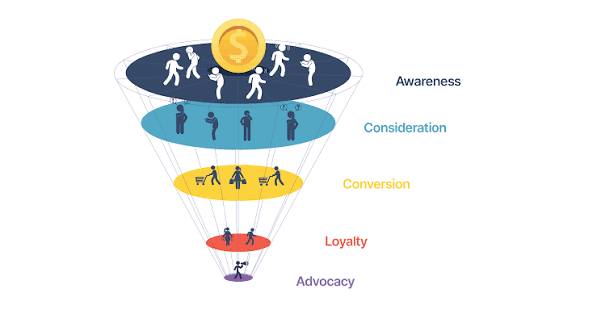
Full-funnel ecommerce account structures are incredibly easy to put on a media plan, but they are notoriously hard to maintain inside an active ad platform.
Google and Meta each hand you a single, automated campaign type that claims to magically cover every stage of the buyer’s journey. However, each system will predictably spend the vast majority of your budget at the absolute bottom of the funnel, simply because that is where conversions are cheapest.
Just as publishers must align their sites with the new Google helpful content guidelines to capture organic demand, media buyers must manually structure their paid accounts to create new demand. Black Friday is rapidly approaching. If you want a full-funnel ecommerce account to actually impact your Q4 revenue, you must start making these structural changes today.
Table of Contents
- Why Automated Campaigns Ignore the Top of the Funnel
- Meta Removed Its Best Full-Funnel Ecommerce Account Lever
- How to Rebuild the Meta Existing Customer Cap
- Google Gives You the Lever, But Keeps It Switched Off
- Exclusions Are the Real Full-Funnel Control
- Why This Structural Work Has to Happen Now
- The Ultimate October Optimization Checklist
- Frequently Asked Questions
1. Why Automated Campaigns Ignore the Top of the Funnel
Performance Max (Google) and Advantage+ (Meta) campaigns are heavily marketed as complete solutions that cover the entire marketing funnel for a full-funnel ecommerce account.
In a very narrow sense, that claim is fair. They serve ads across multiple surfaces and reach people at different stages of consideration. But both algorithms are aggressively bidding toward a strict conversion target. A conversion from someone who has visited your site three times costs a mere fraction of a conversion from a cold audience member who has never heard of your brand.
Give any automated bidder a single efficiency target with no other instructions, and it will buy the cheapest conversions first. That is not a system malfunction; it is the machine doing exactly what it was programmed to do. If automated campaigns absorb your entire budget, nothing funds the top of your full-funnel ecommerce account. Your business ends up competing for demand that already exists instead of generating net-new customers.
2. Meta Removed Its Best Full-Funnel Ecommerce Account Lever
This is the major platform change most ecommerce advertisers have failed to adjust to, making October optimizations more critical this year than ever before for your full-funnel ecommerce account.
Advantage+ Shopping campaigns previously included a brilliant feature called the “Existing Customer Budget Cap.” You simply set a percentage, and Meta actively held your ad spend on existing customers below that threshold. It was the absolute most useful control Meta ever shipped for a full-funnel ecommerce account, and it required zero structural effort from the media buyer.
Now that this feature is gone, Meta’s Help Center lists it as “no longer available,” noting that advertisers can still achieve the same outcome manually. Advantage+ Shopping has now been folded into broader Advantage+ Sales campaigns, which brought ad sets back and restored custom audience exclusions. The capability still exists, but Meta has forced the manual labor back onto you.
3. How to Rebuild the Meta Existing Customer Cap
Meta’s official documentation outlines two ways to replicate this lost feature, depending heavily on your overall account size.
The simplest version involves launching one manual sales campaign that strictly excludes custom audiences representing your existing customers. This is the structural equivalent of the old cap being set to zero percent. Everything inside this specific campaign is prospecting by pure definition.
For larger accounts, the best full-funnel ecommerce account setup uses two distinct ad sets. One ad set targets existing customers, while the other targets a broad audience with those existing customers explicitly excluded. If you are utilizing Advantage+ campaign budgets, you can apply ad set spending limits to hold the financial split exactly where you want it. This strategy gives you percentage control back while allowing you to serve totally different creative assets to each group.
4. Google Gives You the Lever, But Keeps It Switched Off
Google’s equivalent control is called the “New Customer Acquisition Goal,” and its fundamental problem is the exact reverse of Meta’s situation.
This goal exists, it works beautifully, yet plenty of media buyers managing a full-funnel ecommerce account never bother to turn it on. According to Google, this goal runs in two distinct modes. The first mode bids higher for new customers while still serving ads to existing ones. The second mode serves ads to new customers only. It is available on Performance Max, Search, and Demand Gen campaigns.
How Google identifies a new customer dictates whether this feature actually works. It relies on either your past online purchase conversion history or existing customer lists you share via Customer Match. Relying on conversion history alone is often flawed. If you give Google a real Customer Match list of your actual buyers, the algorithm becomes exponentially smarter. To fully grasp how these data systems interact, review foundational documentation on modern digital marketing data architecture.
5. Exclusions Are the Real Full-Funnel Control
Both the Meta and Google tactics rely on the exact same underlying idea. You aren’t artificially adding funnel stages; you are actively taking cheap conversions off the table. By blocking easy conversions inside specific campaigns, you force the budget to go somewhere else, which is the entire goal of a full-funnel ecommerce account.
The exclusion list that does the heavy lifting in a true full-funnel ecommerce account is surprisingly short:
- Recent Purchasers: Exclude buyers from the last 30, 60, or 90 days, depending entirely on your product’s repurchase cycle.
- Full Customer Files: Upload your entire customer CRM file and refresh it monthly, rather than relying on a list you uploaded once in early 2024.
- Cart Abandoners: Exclude these if you run a separate retargeting flow for them, ensuring two campaigns do not bid against each other for the same user.
- Brand Terms: Keep brand keywords strictly out of the campaigns you are judging on net-new customer acquisition.
Brand traffic converts beautifully, which means any campaign it touches will look incredibly profitable. Keep buying your brand terms defensively, but keep them completely isolated in their own campaign so your prospecting numbers remain mathematically pure.
6. Why This Structural Work Has to Happen Now
Upper-funnel ad spend typically takes roughly six to eight weeks before it successfully impacts your bottom-line revenue.
Consumers who meet your brand for the very first time in October make up a massive, meaningful share of your November and Black Friday buyers. Consumers who meet you for the first time on November 20 are mostly just expensive window shoppers.
Prospecting funded properly in October pays out massively during Q4. Conversely, prospecting funded in the middle of Q4 mostly pays out in January, bought at inflated holiday auction prices. This is the absolute worst version of the trade. If you panic and cut prospecting in November because the ROAS looks soft, you haven’t saved money; you have simply moved your December revenue problem forward.
7. The Ultimate October Optimization Checklist
If you do absolutely nothing else this month to protect your full-funnel ecommerce account, execute these five steps in this exact order:
- Export Your CRM: Export your customer file and upload it immediately as a Customer Match list.
- Toggle Google Goals: Turn on the new customer acquisition goal in “bid-higher mode” across your active Performance Max campaigns.
- Rebuild Meta Caps: Rebuild the existing customer cap on Meta using the two-ad-set structure with strict spending limits.
- Audit Exclusions: Audit your exclusions across both platforms to ensure your audience lists are not stale.
- Fix Budgets: Set your top-of-funnel prospecting budget as a hard, fixed dollar amount rather than a flexible percentage.
None of this structural work is inherently difficult; it is simply tedious work that everyone prefers to put off. Get the structure of your full-funnel ecommerce account right today. You can argue about attribution and last-click ROAS in January when you actually have the time. For advanced tutorials on adjusting these exact campaign settings, always consult the official Google Ads Help portal.
Frequently Asked Questions
What is a full-funnel ecommerce account?
A full-funnel ecommerce account is an advertising setup—spanning platforms like Google and Meta—that deliberately allocates budget to every stage of the buyer’s journey. It separates cold prospecting (awareness) from warm retargeting (harvesting) to ensure the brand generates new customers rather than just heavily retargeting existing ones.
Why does Performance Max only target the bottom of the funnel?
Performance Max uses machine learning to hit a specific Return on Ad Spend (ROAS) or Cost Per Acquisition (CPA) target. Because it is much cheaper to convert someone who already knows your brand, the algorithm will naturally spend the vast majority of your budget on retargeting and brand search to hit its efficiency goals easily. This fundamentally breaks the architecture of a full-funnel ecommerce account.
How do I stop Facebook ads from only targeting past buyers?
With the removal of Meta’s “Existing Customer Budget Cap,” you must now use manual exclusions. The most effective method is to create two ad sets within your Advantage+ Sales campaign: one targeting your custom audience of past buyers, and a second ad set targeting a broad audience that explicitly excludes that past-buyer custom audience list.

