


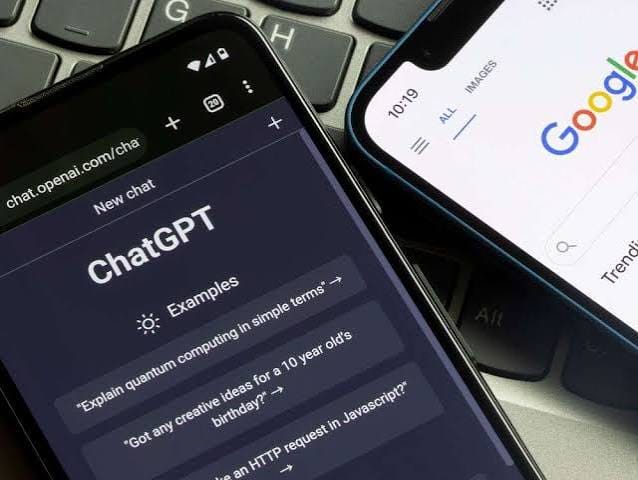
Analyzing your ChatGPT link CTR is rapidly becoming the most alarming priority for digital publishers and search engine marketers today.
A highly explosive court filing from major news publishers currently suing OpenAI and Microsoft has just revealed stunning internal communications. According to the documents, an OpenAI software engineer explicitly stated in February 2023 that “no matter how prominently we show the links, users won’t click.”
Just as AI developers must carefully manage how their language models output data Claude Opus 5.5 prompting guidance, publishers must aggressively protect their inbound traffic.
If your website heavily relies on organic search traffic, here is a detailed breakdown of the massive legal battle and the 3 worst threats driving down your ChatGPT link CTR.
1. The Devastating Internal OpenAI Quotes
The consolidated copyright case, currently unfolding in a federal court in New York, hinges on whether generative AI chatbots act as illegal commercial substitutes for original journalism.
The plaintiffs’ combined summary judgment brief, filed on September 17, quotes Nick Turley, OpenAI’s official head of ChatGPT. Regarding the chatbot’s highly publicized “browse” function, the brief alleges Turley admitted there was simply “no good reason to click” on a link to the original source once the AI generated an answer.
These internal quotes severely threaten the narrative that AI search engines will organically drive traffic to creators. If the core design philosophy assumes a negligible ChatGPT link CTR, publishers face a catastrophic loss of monetization and visibility.
2. Microsoft’s Own Staggering CTR Data
To further prove that chatbots suppress outbound traffic, the publishers’ legal brief heavily cites internal Microsoft data comparing engagement between traditional Bing Web Search and Bing Chat (now officially rebranded as Microsoft Copilot).
The data reveals a terrifying drop in outbound clicks. For The New York Times, the ChatGPT link CTR equivalent inside Bing Chat was an astonishing 87% to 93% lower than traditional search. The Daily News plaintiffs saw an 83% to 91% drop, while Ziff Davis sites experienced a 51% to 94% collapse.
The court filing defines this metric strictly as the percentage of physical clicks to a URL relative to its total impressions within the chatbot’s interface. To understand the baseline mathematical mechanics of these metrics, review official documentation on traditional click-through rate.
3. The Legal Battle Over “Substitution”
The core legal argument presented by the publishers is that these massive reductions in ChatGPT link CTR clearly prove “substitution.”
They fiercely argue that they are not even required to mathematically prove financial harm with endless data because “common sense suffices.” If an AI assistant fully extracts and displays the value of a published article, the human user has zero incentive to click the citation.
Conversely, OpenAI and Microsoft aggressively argue that their ingestion of news content falls strictly under “fair use.” They claim that AI outputs do not create direct commercial substitutes for original journalism. You can read more about their corporate defense strategies directly on the official OpenAI website.
What Marketers Must Watch Next
Being cited by an AI and actually receiving a click are two entirely different measurements.
Historically, when Microsoft first added chat data to its Webmaster Tools Performance report in 2023, it confusingly combined web and chat metrics. The new figures heavily separate them, proving that generative interfaces actively destroy the traditional ChatGPT link CTR that publishers depend on for ad revenue.
Judge Sidney H. Stein has officially set October 23 for legal oppositions, October 30 for amicus briefs, and November 20 for final replies. Digital marketers and SEO professionals must carefully watch whether Microsoft and OpenAI provide missing context for these devastating internal quotes, as the outcome of this lawsuit will permanently alter the future of web traffic.
Frequently Asked Questions
What does ChatGPT link CTR actually measure?
The ChatGPT link CTR explicitly measures the percentage of users who physically click an outbound citation link after an AI chatbot generates a conversational response. Recent lawsuit data suggests this metric is heavily suppressed compared to traditional search.
Why are publishers suing OpenAI and Microsoft?
Major publishers, including The New York Times, are suing because they allege AI chatbots ingest their copyrighted journalism to generate answers, ultimately destroying their website traffic and acting as illegal commercial substitutes.
How much lower is the CTR in AI chatbots?
According to internal Microsoft data cited in the recent court filing, click-through rates for major publishers dropped between 51% and 94% inside generative AI chat interfaces compared to traditional search engine results.

