


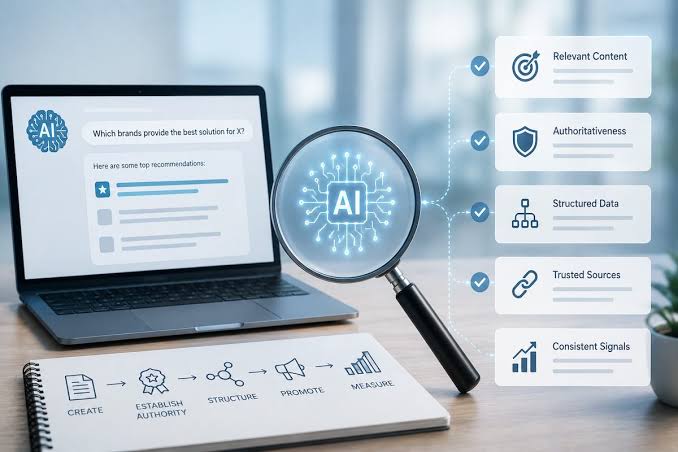
Artificial intelligence has permanently inserted itself into the search marketing ecosystem. As generative models intercept user queries, digital marketers are scrambling to figure out how to remain visible. The absolute best way to become the answer in AI search is to utilize the ASC framework.
Some marketers believe that optimizing for AI is just traditional SEO with a new name, but that is not entirely accurate. The starting and ending points differ dramatically. Just as site owners must fix technical roadblocks when their Google Indexing API requests ignored errors pile up, marketers must fix their entity visibility. The ASC framework—which stands for Analysis, SEO, and Content—bookends traditional search optimization to help you understand exactly how AI sees your brand. Here are 5 shocking secrets to turning your digital gaps into a practical visibility plan.
Table of Contents
- What is the ASC Framework?
- Analysis: Discovering What AI Thinks About You
- SEO: Making Your Business Legible to Machines
- Content: Filling the Gaps in Your Influence Map
- Putting the ASC Framework into Practice
- Frequently Asked Questions
1. What is the ASC Framework?
The ASC framework wraps a highly strategic plan around three foundational marketing concepts you already know: Analysis, SEO, and Content. Its primary goal is to take your brand from having no idea what AI says about you, directly to a clear, one-page visibility plan.
While the ASC framework is primarily built around Google, where the vast majority of search volume still lives, the exact same mechanics travel perfectly to other massive language models like Claude and Perplexity. By utilizing this strategy, you stop guessing what the algorithms want and start systematically providing the exact data points that language models need to recommend your products.
2. Analysis: Discovering What AI Thinks About You
The first pillar of the ASC framework is Analysis. Your goal here is to understand your current baseline. You must ask three vital questions: What does the AI say about my category? Who does it currently recommend? And finally, what does it say about us?
Models do not hallucinate at random; they fill data gaps with plausible content. The thinner your digital coverage is, the more the AI has to invent. To execute the analysis phase of the ASC framework, start with one distinct customer segment. Write 20 targeted prompts across the entire buyer journey (Awareness, Consideration, and Action).
Run these exact prompts in a private, logged-out browsing window. Record whether your brand was mentioned, who else was mentioned alongside you, and exactly which external sources the AI cited to build its answer. This provides a brilliant diagnostic map of your current market share.
3. SEO: Making Your Business Legible to Machines
The second pillar of the ASC framework is SEO. Because Google’s AI answers are still deeply grounded in Google’s traditional index, technical SEO matters more than ever.
According to data published by Search Engine Land, recent algorithm updates massively reward businesses that offer real products, allow task completion, possess proprietary assets, and maintain a tight topical focus. These are not just SEO tactics; they are fundamental business decisions. An AI can reproduce a generic blog article easily, but it cannot reproduce a proprietary dataset or a live booking system.
To succeed with the ASC framework, you must make your site mathematically legible. You need a dedicated page for every single service, product, and location. Ensure your internal hierarchy reflects how the business actually works. Clean up your HTML, utilize proper structured data, and put direct answers near the top of your pages so passages can be easily lifted by the AI out of context.
4. Content: Filling the Gaps in Your Influence Map
The final pillar of the ASC framework is Content. Once your analysis reveals exactly where you are absent, you must turn those specific gaps into a rigorous content plan.
The secret to the content phase of the ASC framework is adapting your core message to four specific user behaviors: streaming, scrolling, searching, and shopping. For example, a case study in your Action phase becomes a short-form video for streaming, an infographic for scrolling, a detailed blog post for searching, and a hard proof point tied to a checkout button for shopping.
Before making anything entirely new, go through your existing service pages and make them incredibly specific. Include named sectors, exact locations, real numbers, and precise pricing. Just as importantly, explicitly publish what you are not a fit for. This level of honesty is incredibly powerful for AI visibility because almost no competitors bother to publish it.
5. Putting the ASC Framework into Practice
Implementing the ASC framework does not require deceptive AI trickery. It simply requires you to be a legitimate business that is genuinely worth recommending.
Start by picking one customer segment and running your 20 diagnostic prompts through ChatGPT and Google. Fill in your influence map based on the citations you find. Then, sanity-check your business reality: do you have strong proprietary assets and clear technical hygiene? Finally, write your core messages and cut them into different formats to match user behaviors.
Run these same 20 prompts again in 90 days. Because the technology moves incredibly fast, applying the ASC framework as a routine, quarterly audit ensures that as artificial intelligence evolves, it continues to confidently recommend your brand to the world.
Frequently Asked Questions
What does the ASC framework stand for?
The ASC framework stands for Analysis, SEO, and Content. It is a strategic marketing methodology designed to help brands understand how AI search engines view them, optimize their technical digital footprint, and fill content gaps to secure AI recommendations.
How do I check my AI search visibility?
To check your baseline visibility using the ASC framework, log out of your accounts, open a private browsing window, and type 20 industry-specific questions into tools like Google AI Overviews and Claude. Document exactly which brands the AI recommends and which websites it cites as sources.
Does traditional SEO still matter for AI search?
Yes. Because major AI search features are grounded in traditional search indexes, the SEO phase of the ASC framework is critical. You must ensure your site has a clean hierarchy, fast loading speeds, and robust structured data so the AI can easily parse your business facts.

